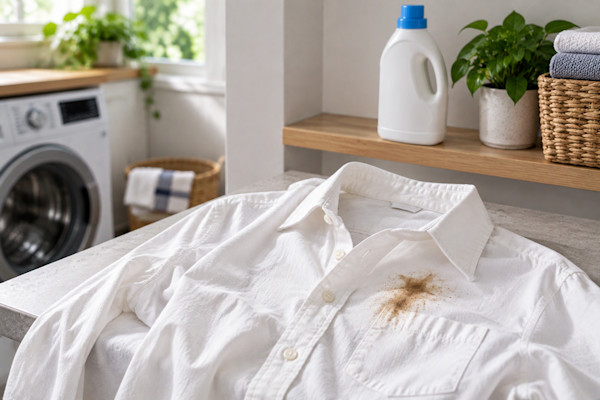
A white shirt, a stubborn mark and a bottle of bleach on the shelf make a tempting trio. Here's the straight answer on using bleach on clothes alongside a stain remover: don't mix them directly. Pretreat the stain, rinse the garment thoroughly, and use bleach separately only if both the product and garment-care labels permit it.
Adding detergent and bleach to the same wash load through separate dispensers, as directed, is different from mixing concentrated products together. Knowing the difference helps you tackle tough stains with bleach for clothes without compromising laundry safety.
Which Surf Excel detergent suits your whites?
Pick the product approved for your machine, and follow its dose and the care label.
Product | Machine | Approved dose |
Surf Excel Easy Wash Detergent Powder | Hand wash; semi-automatic | Hand wash: approx. 30 g regular, 45 g heavily soiled. Semi-auto: approx. 45 g regular, 60 g heavily soiled |
Surf Excel Quick Wash Detergent Powder | Hand wash; semi-automatic | Hand wash: approx. 30 g regular, 45 g heavily soiled. Semi-auto: approx. 45 g regular, 60 g heavily soiled |
Surf Excel Matic Top Load Liquid | Top-load fully automatic; semi-automatic | 1 cap (approx. 60 g) regular load; 1½ cap (approx. 90 g) large or heavily soiled load |
Surf Excel Matic Front Load Liquid Detergent | Front-load only | 1 cap (approx. 60 g) regular load; 1½ cap (approx. 90 g) large or heavily soiled load |
Surf Excel Matic Express Liquid Detergent | All machines, including top-load fully automatic and front-load | 1 cap (approx. 40 ml) regular load |
Surf Excel Matic Smart Shots | All machines, including top-load fully automatic and front-load | 1 shot regular load; 2 shots heavy load |
Here's what each product brings to white clothes. None of them is a bleach, so use them for the pretreatment and wash steps below.
Surf Excel Easy Wash Detergent Powder. Its high-active surfactant system helps with oily and particulate soils, its multi-enzyme system supports removal of food stains containing proteins, starches, tough fat and gum, and its whiteness boosting system enhances whiteness and brightness.
Surf Excel Quick Wash Detergent Powder. This high-active powder supports soaking, and its whiteness booster enhances whiteness and brightness
Surf Excel Matic Top Load Liquid. Its whiteness boosters enhance whiteness and brightness, and it has approved tough-stain pretreatment steps.
Surf Excel Matic Front Load Liquid Detergent. It has the same pretreatment steps, and its lower lather helps avoid damage to machine parts.
Surf Excel Matic Express Liquid Detergent. It's designed for quick wash and short cycles, and it removes malodour in cycles as short as 15 minutes.
Surf Excel Matic Smart Shots. This concentrated unit-dose capsule helps remove daily stains such as sweat and body soil, and its anti-redeposition technology helps prevent removed soil settling back on garments.
Can I use a stain remover and bleach together on white clothes?
Not mixed together. Three issues make direct mixing unsafe or ineffective, so mixing bleach and stain remover is something to avoid:
Stain remover may contain incompatible ingredients.Chlorine bleach can release chlorine or chloramine fumes when mixed with acids, ammonia or other incompatible cleaners, and you should never assume an unknown stain-remover formulation is compatible with bleach.
Bleach may reduce enzyme activity. Because enzymes are proteins,hypochlorite can oxidise and inactivate them, which may stop the pretreatment working as intended.
Incorrect bleach use can damage fabric. Undiluted or unsuitable chlorine bleach may weaken or yellow certain fibres, finishes and trims, and a white garment isn't automatically chlorine-bleach safe.
How to bleach white clothes safely: the step-by-step sequence
Step 1: Check both labels
Confirm the garment is washable and note itsbleaching symbol:
Empty triangle. Chlorine or oxygen bleach may be used.
Triangle with two diagonal lines. Use oxygen or non-chlorine bleach only.
Crossed-out triangle. Don't use bleach.
Step 2: Pretreat the stain
With Surf Excel Matic Top Load Liquid or Surf Excel Matic Front Load Liquid Detergent, apply it directly to the stain, rub gently, wait 10–15 minutes, then wash, and repeat if needed. With Surf Excel Easy Wash Detergent Powder or Surf Excel Quick Wash Detergent Powder, soak as directed on the pack.
Step 3: Rinse thoroughly
Rinse the treated area with cool water from the reverse side, which flushes out loosened soil and removes the concentrated pretreatment before any bleach step.
Step 4: Use bleach separately only if needed
If the stain has gone or faded, skip the bleach and wash normally. For a persistent mark, use an oxygen or non-chlorine bleach according to its pack and the care label, and a 30 to 60 minute soak may suit if the product label permits it.
For chlorine bleach, first check the fabric suits it, and dilute the bleach exactly as the label directs. Never pour undiluted chlorine bleach onto the garment, because it can damage fabric or cause discolouration.
Step 5: Wash, inspect and air-dry first
Wash at the warmest temperature the care label permits, and inspect the garment before tumble-drying. Dryer heat can make remaining stains harder to remove, so repeat the treatment if necessary and dry only once the mark is gone.
What works on different white-clothes stains?
Stain type | Pretreatment | Is bleach needed? | Key tip |
Sweat or underarm yellowing | Detergent pretreatment as the pack directs | Oxygen bleach may help if permitted | Treat the underarm area directly, then wash at the warmest safe temperature |
Coffee or tea | Cool rinse, then detergent | Often unnecessary; use fabric-safe bleach only for residue | Act promptly because tannins set quickly, and rinse from the reverse side |
Oil or grease | Detergent pretreatment | Usually not the first choice | Pretreat before washing, because surfactants are needed to lift oily soil |
Curry or turmeric | Detergent pretreatment | Oxygen bleach may help if permitted | Sunlight may fade residual curcumin, but monitor the garment and avoid prints or colours |
Blood | Cold-water rinse, then detergent | A fabric-safe, non-chlorine bleach may follow if needed | Avoid hot water at first, because it can make blood harder to remove |
Ink | Rubbing alcohol, then detergent | May help with residual colour if permitted | Test first, blot rather than rub, rinse thoroughly, then wash |
When should you reach for chlorine bleach, and when should you skip it?
Chlorine bleach is a stain-removal and whitening laundry additive when used according to its label. It oxidises many coloured stain compounds, but it doesn't replace the surfactants and enzymes needed for oily, starchy or protein-rich soils. Consider it only when a stain remains after pretreatment and the fabric, print, trims and care label all permit it.
Skip chlorine bleach in these cases:
- The label says no. The care label says "do not bleach" or "non-chlorine bleach only".
- The garment is sensitive. It has bleach-sensitive fibres or trims, or non-colourfast prints, trim or stitching. - It might be rust. Chlorine bleach can intensify rust marks.
- Detergent already worked. Detergent alone has removed the stain.
Conclusion
Using bleach on clothes works safely when you keep it separate from stain remover. Check both labels, pretreat, rinse well and inspect before reaching for bleach. Then use bleach for white clothes only as the product and care labels allow, and wash with the Surf Excel detergent approved for your machine.
Frequently asked questions
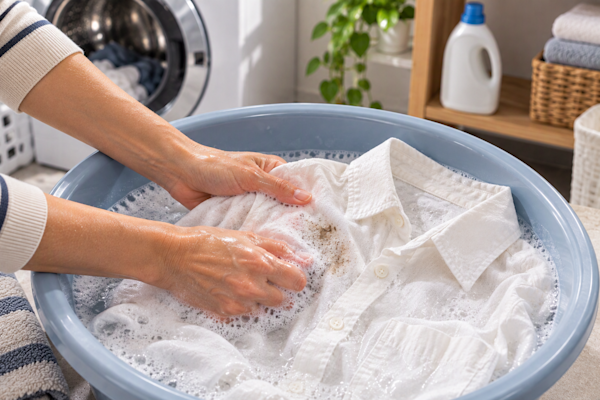
Can I mix stain remover and bleach in the same bucket?
No. Don't directly mix a separate stain remover with chlorine bleach or layer the concentrated products on the garment. The stain remover may contain acids, ammonia or another incompatible ingredient, and chlorine bleach may interfere with enzyme-based treatment, so use the products one after the other.
Does bleach remove all stains from white clothes?
No. Chlorine bleach can remove certain stains and coloured residues and whiten fabric when used as directed, but it doesn't remove every soil. Oil, grease, food residue and protein-rich soils generally need detergent pretreatment.
What should I do if I accidentally mix bleach and stain remover?
Stop immediately, and don't add other chemicals or try to neutralise the mixture. If you notice a strong odour, coughing, irritation or difficulty breathing, move to fresh air and keep others away. If anyone has symptoms, seek immediate medical attention, and follow the manufacturer's instructions for cleanup.
Is oxygen bleach safer than chlorine bleach for white clothes?
Oxygen or non-chlorine bleach is generally gentler on many washable fabrics. It may be a powder or liquid, so follow the garment-care and bleach labels, and don't combine it with chlorine bleach.
How do I remove yellow sweat stains from white shirts?
Pretreat the underarm area as the pack of your Surf Excel product directs, then wash at the hottest temperature the care label permits. If yellowing remains, use an oxygen bleach soak if the garment and product allow it. Use chlorine bleach only when the care label allows it, because it can yellow or weaken some fibres and finishes.
Should I use hot or cold water for stains on white clothes?
Use cool water for the first rinse when the stain is unknown or contains blood or another heat-sensitive protein. After pretreatment, wash at the warmest temperature the care label permits.
How long should I leave stain remover on white clothes?
Follow the product label. For Surf Excel Matic Top Load Liquid and Surf Excel Matic Front Load Liquid Detergent, leave it 10–15 minutes after applying and rubbing gently, and for the Easy Wash and Quick Wash powders, soak as directed on the pack. Don't extend it unless the label permits, and don't let a pretreatment dry on the garment.
Is bleach for clothes safe on coloured garments?
Not automatically. Test on a hidden area first, and don't use chlorine bleach on a coloured garment unless the care label and product instructions allow it. If only non-chlorine bleach is permitted, use oxygen bleach as directed.
Can I use Surf Excel detergent and bleach in the same wash?
Only if both labels permit it. Follow each pack's dose and dispenser directions, keep the products separate rather than mixing concentrates, and check the label first if a pack doesn't mention bleach.
How long should I soak white clothes in oxygen bleach?
Follow the product label. A 30 to 60 minute soak may suit if the label permits it, but don't extend it beyond what the pack allows.
Can bleach remove rust stains from white clothes?
No. Chlorine bleach can intensify rust marks, so don't use it on a suspected rust stain. Rinse the area and check the care label before trying another treatment.
