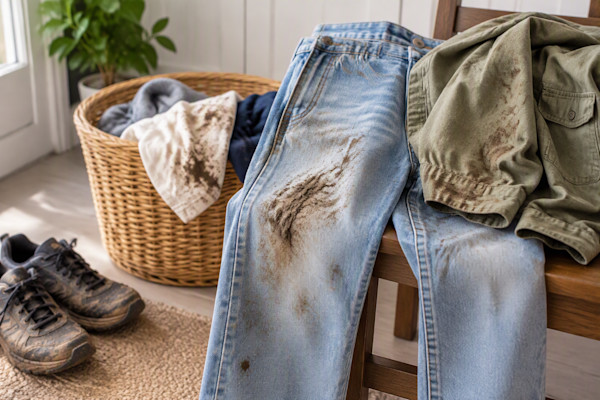
Dried mud and soil stains that have survived the washer and dryer can often still be removed. Brush away loose soil, rehydrate the mark with cool water, apply Surf Excel Matic Top Load Liquid directly for 10 to 15 minutes, then rewash at the warmest temperature permitted by the garment’s care label. For a heavily dried-in stain, a 15 to 30-minute cool-water soak may help loosen the remaining soil.
Patience is important.Time and heat exposure can make stains harder to remove, so do not put the garment back in the dryer until the mark has gone. Mud-stained clothing may need more than one treatment-and-wash cycle.
Why mud and soil stains are so common, and why to treat them early
Mud and soil stains are among the most common stains on clothes, whether from children playing outdoors, gardening, sports activities or rainy-day splashes. Treat the stain as early as possible, before it sets into the fabric. If it has already survived the washer and dryer, the steps below still apply.
Why dried mud stains become harder to remove
Mud contains particulate soil, including clay and mineral particles, as well as varying amounts of organic material. Once dry, fine particles can become trapped within the fabric structure and held against the fibres by physical surface interactions.
A tumble dryer does not necessarily make a mud stain permanent, buttime and heat can make the remaining soil harder to dislodge. This is why stained garments should be inspected before tumble-drying or ironing.
How to remove dried, heat-exposed mud stains
1. Let any remaining mud dry
If part of the mud is still damp, let the garment air-dry until the surface soil is dry and crusty. Rubbing damp mud can spread it across clean fabric and work more particles into the weave.
2. Brush off the excess
Take the garment outside or hold it over a bin. Gently shake the garment, then remove as much dry mud as possible with a soft or medium-bristled clothes brush, the back of a spoon or a blunt knife.
Avoid aggressive scrubbing, especially on fine, loosely woven or delicate fabrics. The objective is to lift loose surface soil without abrading the fibres or forcing particles deeper into the fabric.Letting mud dry before brushing is an established first step for washable clothing.
3. Rehydrate the stain
Hold the stained area under cool running water, working from the reverse side where practical. Flushing from the back helps move loosened material out of the fabric rather than further through it.
For a heavily dried-in stain,soak the washable garment in cool water for 15 to 30 minutes. Check the care label first, particularly for coloured garments, dry-clean-only clothing and fabrics that may be damaged by soaking.
4. Pre-treat with liquid detergent
Apply Surf Excel Matic Top Load Liquid directly to the stain.
Rub gently with your fingertip and extend the treatment slightly beyond the visible edge, as fine soil may remain around the main mark. Leave the detergent on for 10 to 15 minutes, or follow any different dwell time stated on the product pack, then wash. Repeat if necessary.
Liquid detergent is convenient for pre-treatment because it can be applied directly without first being mixed with water. This does not mean powder detergent is ineffective against mud.Powder can still be used in the main wash and, where its directions permit, prepared as a paste for pre-treatment.
For a very stubborn stain, use a 15 to 30-minute cool-water soak with the detergent quantity directed on the product label. Avoid estimating with an unspecified “capful”, because dosage varies by product and load.
5. Wash at the warmest safe temperature
Check the care label andwash at the warmest temperature permitted for that garment, using the appropriate cycle and the product’s regular dosage. Following the care-label temperature is more reliable than applying a universal hot- or cold-water rule.
To wash with Surf Excel Matic Top Load Liquid:
- 1
Use 1 cap (approx. 60 g) for a regular load and regular soil.
- 2
Use 1 ½ caps (approx. 90 g) for a large load or a heavily soiled load.
Surf Excel Matic Top Load Liquid is designed for top load fully automatic and semi-automatic washing machines.
6. Inspect before using the dryer
After washing, examine the stained area in good light. If any mud or discolouration remains, repeat the pre-treatment and wash.
Air-dry the garment while assessing the result.Do not tumble-dry or iron it until the stain has gone, because further heat exposure can make the remaining mark harder to remove.
What the detergent is doing
Understanding the cleaning process can help when a dried mud stain needs a second or third treatment:
●Surfactants improve wetting and help release soil from the fabric into the wash water.
●Enzymes work on compatible organic components, depending on the enzyme and the material present. They do not dissolve the mineral or clay portion of mud.
●Anti-redeposition agents help keep loosened particles dispersed in the wash liquor so they are less likely to settle back onto the fabric.
●Mechanical action and suspension help carry released particulate soil away during washing.
Particulate-soil removal therefore depends on physical removal, wetting, surfactant action and keeping released material suspended in the wash water.
Surf Excel Matic Top Load Liquid specifically has a multi-enzyme system and anti-redeposition technology, along with fast dissolution and no-powder-residue benefits.
What makes Surf Excel Matic Top Load Liquid effective on mud and soil stains
1. Helps break down stains into smaller particles
Mud and soil particles can cling tightly to fabric fibres. Surf Excel Matic Top Load Liquid contains cleaning technologies that help break down stain deposits into smaller particles, making them easier to lift away during the wash cycle.
2. Multi-surfactant cleaning system
Surf Excel Matic Top Load Liquid contains a combination of surfactants that work together to:
- 1
Loosen dirt and soil deposits from fabric surfaces.
- 2
Lift stain particles away from fibres.
- 3
Keep removed dirt suspended in wash water.
- 4
Enable efficient cleaning during the wash cycle.
3. Helps prevent re-deposition of dirt
One of the challenges with mud stains is that loosened soil can redeposit onto clothes during washing. The cleaning system in Surf Excel Matic Top Load Liquid helps keep dirt dispersed in the wash water, reducing the chances of re-deposition and improving overall cleanliness.
4. Keeps whites brighter and clothes cleaner
Beyond stain removal, the detergent helps maintain fabric brightness by effectively removing dirt and soil build-up that can make clothes appear dull over time. This helps keep whites looking brighter and everyday garments cleaner wash after wash.
Removing mud stains from different fabrics
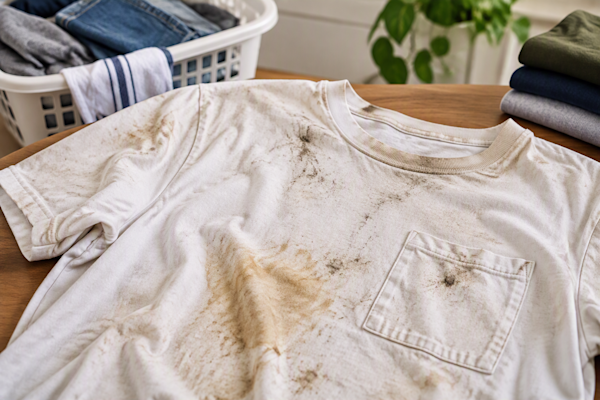
The basic dry, brush, rehydrate, pre-treat and wash method is suitable for many washable garments, but the care label remains the final authority.
Fabric type | Water-temperature approach | Enzyme detergent | Notes |
White cotton | Warm or hot only if the care label permits | Usually suitable | Generally tolerates more thorough treatment, but check the bleach and drying instructions |
Coloured cotton | Cool initial treatment; wash at the labelled temperature | Usually suitable | Test the detergent on an inner seam if colourfastness is uncertain |
Synthetic blends | Cool to warm, according to the care label | Usually suitable | Do not exceed the labelled temperature |
Denim | Cool to warm, according to the care label | Usually suitable | Turn inside out to help protect the visible finish |
Silk, chiffon and other delicates | Follow the care label exactly | Do not assume suitability | Chiffon can be made from different fibres; use a detergent approved for the fibre or seek professional cleaning |
Pretreatments can affect colour, sotest an inconspicuous seam or hem when treating a coloured or unfamiliar fabric. Take dry-clean-only garments to a professional cleaner.
Common mistakes that make mud stains worse
Working on damp mud too aggressively
Rubbing mud while it is still damp can spread the stain. Let the surface soil dry so that most of it can be removed mechanically first.
Scrubbing the fabric
Hard scrubbing can force particles further into the weave and damage the fabric surface. Brush and rub gently, then allow the detergent time to work.
Applying high heat before the stain is removed
Use cool water for the initial rinse or soak. For the main wash, follow the garment’s labelled temperature rather than automatically choosing the hottest programme.
Skipping pre-treatment
A normal wash may not remove soil that has already been washed and dried into the fabric. Direct detergent application and a 10 to 15-minute dwell time improve contact with the remaining stain.
Drying before inspecting
A faint stain can be difficult to assess while the fabric is wet. Inspect it carefully and air-dry if uncertain.Do not return the garment to the dryer until you are satisfied that the stain is gone.
Quick tips for removing mud and soil stains
- 1
Act before the stain sets permanently: treat the garment as soon as possible.
- 2
Never scrub wet mud aggressively: this can spread the stain and push dirt deeper into the fibres.
- 3
Use a soft toothbrush for stubborn stains: gently work the detergent into the affected area.
- 4
Wash muddy clothes separately: this helps avoid soil transfer to other garments.
- 5
Avoid tumble drying stained garments: make sure the stain is fully removed first.
- 6
For heavily soiled clothes: consider soaking the stained area with detergent for a few extra minutes before washing.
When to repeat or escalate the treatment
There is no fixed number of washes required for a heat-exposed mud stain. Some marks lift after one careful treatment, while heavily embedded soil may require two or three attempts.
If the stain remains:
- 1
Repeat the cool-water rinse or soak.
- 2
Apply liquid detergent for another 10 to 15 minutes.
- 3
Wash again at the care-label temperature.
- 4
Air-dry and inspect.
For sturdy, washable and colourfast garments, a longer or overnight soak may be considered if both the garment-care label and detergent directions allow it.
If discolouration remains on washable white cotton, an oxygen-based laundry bleach may help, provided the garment and bleach labels permit its use. On coloured clothing, use only a product explicitly labelled colour-safe and test it first.Do not use chlorine bleach on non-colourfast garments or fibres such as silk, wool or spandex. Conclusion When it comes to mud and soil stains, effective cleaning takes more than removing surface dirt. A detergent must loosen embedded soil, break down stain deposits, prevent dirt from redepositing onto fabrics and help maintain fabric brightness. Combined with the steps above (let the mud dry, brush it off, rehydrate, pre-treat for 10 to 15 minutes, wash at the care-label temperature and inspect before drying), Surf Excel Matic Top Load Liquid’s multi-surfactant system and anti-redeposition technology help break down stubborn soil stains, lift them away from fabric fibres, reduce re-deposition and keep clothes looking cleaner and brighter, making it a strong choice for muddy laundry in everyday households.
Disclaimer: Based on detergent cleaning mechanisms and testing conducted under controlled wash conditions on selected stains and fabrics. Results may vary depending on stain type, fabric composition, water quality, washing habits, and level of soiling. Frequently asked questions
What is the best liquid detergent for mud and soil stains?
Look for a liquid that can loosen embedded soil, break down stain deposits, keep removed dirt from settling back onto the fabric and help maintain brightness. Surf Excel Matic Top Load Liquid is designed for this, with a multi-surfactant system, anti-redeposition technology and a multi-enzyme system, and it is made for top load fully automatic and semi-automatic washing machines. Pre-treat the stain directly for 10 to 15 minutes, then wash at the recommended dosage.
Can you remove a mud stain after it has been dried in the dryer?
Often, yes. Dryer exposure makes the stain harder to remove but does not automatically make it permanent. Brush away dry soil, soak the washable garment in cool water for 15 to 30 minutes, pre-treat with liquid detergent for 10 to 15 minutes and rewash. Repeat if necessary.
Should you wash mud stains in hot or cold water?
Start with cool water for rinsing or soaking. For the main wash, use the warmest temperature permitted by the garment’s care label. Do not use high heat simply because the stain is stubborn.
Why should you let mud dry before treating it?
Drying allows you to brush away much of the solid soil before introducing water or detergent. Rubbing damp mud can spread particles across the garment and further into the weave.
What detergent format is best for pre-treating mud stains?
Liquid detergent is particularly convenient because it can be applied directly. Powder detergent remains effective in the wash and may be used as a pre-treatment paste if the product directions permit it.
How do you remove mud stains from coloured clothes?
Use cool water for the initial rinse or soak, test the treatment on an inner seam and wash at the temperature stated on the care label. Avoid chlorine bleach on non-colourfast clothing. If further treatment is necessary, use only a fabric-compatible product labelled safe for colours.
How many washes does it take to remove a dried mud stain?
There is no guaranteed number. A mild stain may lift in one cycle, while a heavily dried or heat-exposed stain may require two or three treatment-and-wash attempts. Inspect and repeat before using the dryer.
