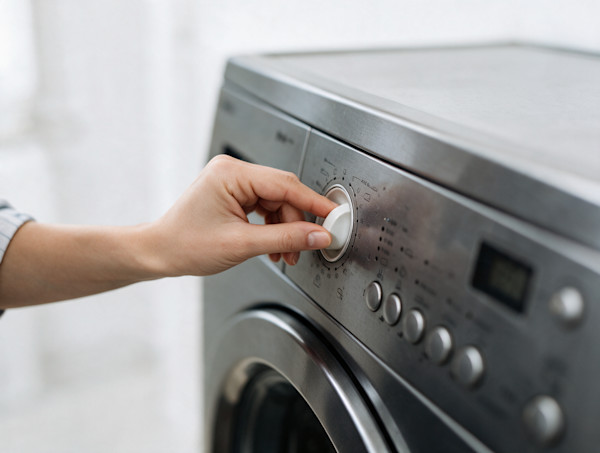
Most of us use the same one or two cycles on our washing machine and never touch the rest. Cotton, Synthetics, Easy Care, Quick Wash, 30°C, 40°C, 800 RPM, 1,200 RPM… it’s a lot of choice for a load of T-shirts and office shirts. Yet the setting you pick decides how clean your clothes come out, how long they last and how much each wash costs.
The good news is that everyday laundry needs only a few settings. For a standard load in a front-load machine, the Cotton or Normal cycle, cold to 40°C, with a medium spin of around 800–1,000 RPM covers most of what you wear. In a top-load machine, the Regular or Normal cycle with cold or warm water and a water level that matches the load does the same job. For synthetics and blends, switch to the Easy Care or Synthetics cycle with a lower spin.
This guide walks you through the right washing machine settings for clothes, when to choose warm over cold, and how to pair each cycle with the right detergent. Cycle names vary by brand, so keep your machine’s manual and each garment’s care label handy.
Which Surf Excel detergent suits your machine and wash setting?
Match the detergent to your machine first, then to the cycle.
Product | Machine | Suited to | Dose |
Surf Excel Matic Front Load Liquid Detergent | Front-load only | Everyday loads in front-load machines; lower lather helps avoid damage to machine parts | 1 cap (approx. 60 g) regular; 1½ cap (approx. 90 g) large or heavily soiled |
Surf Excel Matic Top Load Liquid | Top-load fully automatic and semi-automatic | Everyday loads in top-load machines | 1 cap (approx. 60 g) regular; 1½ cap (approx. 90 g) large or heavily soiled |
Surf Excel Matic Express Liquid Detergent | All machines, including top-load fully automatic and front-load | Quick wash and short cycles; removes malodour even in short cycles as low as 15 minutes; suitable for active wear | 1 cap (approx. 40 ml) regular |
Surf Excel Matic Smart Shots | All machines, including top-load fully automatic and front-load | Pre-measured dosing; 3-in-1 benefits of stain removal, long-lasting fragrance and fabric care | 1 shot regular; 2 shots heavy |
Surf Excel Easy Wash Detergent Powder | Hand wash; semi-automatic machines | Fast-dissolving, with a high-active surfactant system and anti-redeposition technology; not for fully automatic or front-load machines | Hand wash: approx. 30 g regular, 45 g heavily soiled. Semi-auto: approx. 45 g regular, 60 g heavily soiled |
Surf Excel Quick Wash Detergent Powder | Hand wash; semi-automatic machines | High-active surfactant system helps remove oily and food-based soils; anti-ashing helps keep coloured clothes bright; not for fully automatic or front-load machines | Hand wash: approx. 30 g regular, 45 g heavily soiled. Semi-auto: approx. 45 g regular, 60 g heavily soiled |
What these products bring to everyday washing:
Multi-surfactant system: Surf Excel Matic Front Load Liquid Detergent, Surf Excel Matic Top Load Liquid, Surf Excel Matic Express Liquid Detergent and Surf Excel Matic Smart Shots all have one. It provides robust oily and particulate soil removal by helping the wash liquor break down greasy soils and detach stains from fabric.
Chelating agent: Surf Excel Matic Front Load Liquid Detergent, Surf Excel Matic Top Load Liquid, Surf Excel Matic Express Liquid Detergent and Surf Excel Matic Smart Shots all contain one. It binds hardness and trace metal ions to protect cleaning performance and reduce scale risk in the washing machine. That matters in cities with hard groundwater:82% of samples in a South West Delhi study were very hard, and studies inBengaluru andcoastal South Chennai found high hardness too. Liquid format: Surf Excel Matic Front Load Liquid Detergent, Surf Excel Matic Top Load Liquid and Surf Excel Matic Express Liquid Detergent provide faster dissolution to work in short cycles. They leave no residue on fabric, support machine and fabric care, and help keep colours looking bright for longer.
Where to add it: Pour liquid detergent into the main wash compartment of the dispenser, usually marked “II.” Follow the pack instructions for Surf Excel Matic Smart Shots. Use the measuring cap for liquids, because overdosing is one of the most common causes of residue.
Surf Excel Easy Wash Detergent Powder and Surf Excel Quick Wash Detergent Powder are made for hand washing and semi-automatic machines, not for fully automatic or front-load machines.
Front load wash settings for a standard load
Front-load machines tumble clothes through a shallow pool of water, using gravity and drum rotation instead of an agitator. They use less water, so the right cycle and the right detergent matter more.
Recommended settings:
Cycle: Cotton, Normal or Daily Wash.
Temperature: Cold or 30°C for colours and lightly worn clothes; up to 40°C for whites or slightly stained items, if the care label allows.
Spin: Medium, around 800–1,000 RPM.
Extra rinse: Turn it on if you have hard water or are washing synthetic sportswear.
Why these settings work: The Cotton or Normal cycle gives balanced agitation and enough wash time for everyday sweat and light marks. A medium spin removes enough water for reasonable drying time while keeping creasing down. Save higher spins of 1,200–1,400 RPM for towels and bedding.
Detergent: Use Surf Excel Matic Front Load Liquid Detergent, at 1 cap (approx. 60 g) for a regular load and 1½ cap (approx. 90 g) for a large or heavily soiled load. Its multi-surfactant system is specially suited to front-load machines, and its lower lather helps avoid damage to machine parts.
Top-load settings for everyday clothes
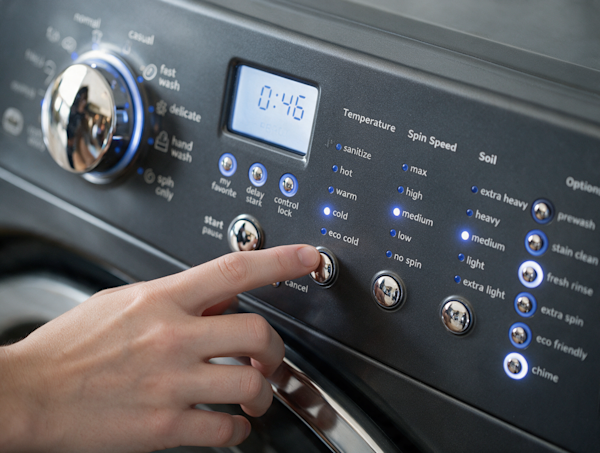
Top-load machines fill the drum with more water and move clothes with an agitator or impeller.
Recommended settings:
Cycle: Regular or Normal.
Water level: Match it to the load size. Too much water lets clothes float without enough friction, and too little crams them together so they don’t rinse properly.
Temperature: Cold or warm, if your machine offers temperature options.
Agitation: Medium.
Why these settings work: The Regular cycle gives enough agitation to lift dust, sweat and light stains, without the long soak of a Heavy Duty cycle. Warm water helps with oily marks, and cold water protects colours.
Detergent: Use Surf Excel Matic Top Load Liquid, which is made for top-load fully automatic and semi-automatic machines. Use 1 cap (approx. 60 g) for a regular load and 1 1⁄2 cap (approx. 90 g) for a large or heavily soiled load, such as gym clothes or children’s play outfits.
What is the easy care cycle, and when should you use it?
The easy care cycle, often labelled Easy Care or Synthetics, is designed for polyester, poly-cotton blends and other synthetic or mixed fabrics. It usually runs at a lower temperature with gentler movement and a lower spin than the Cotton cycle, which helps reduce creasing and pilling.
Use the easy care cycle for:
-Poly-cotton office shirts and trousers
-Synthetic sportswear and activewear
-Mixed-fibre everyday clothes that crease easily
Recommended settings: cold to 30–40°C (as the care label allows), a low to medium spin of around 600–800 RPM, and an extra rinse for sportswear. For quick washes of lightly worn activewear, Surf Excel Matic Express Liquid Detergent is designed for short cycles and is suitable for active wear.
Warm versus cold wash: which is better for stains, fabric care and odour?
Neither temperature is better for everything. The right choice depends on what you’re washing and what’s on it.
What matters | Cold wash | Warm wash |
Energy cost | Lowest;water heating consumes about 90% of the energy it takes to operate a clothes washer | Higher, because the machine heats the water |
Protein stains (milk, egg, blood) | Better;protein coagulates with heat, so cold helps stop these stains setting | Can set protein stains if they weren’t pre-treated |
Oily and greasy stains | Less effective on heavy grease | Better;extension guidance is to wash grease in the hottest water safe for the fabric |
Fabric care and colour | Gentler; less risk of shrinking and fading | More risk of shrinking cotton and fading colours |
Odour from body soil | Fine for everyday loads with the right detergent | Helps lift body oils from heavily worn clothes |
For odour in short cycles, Surf Excel Matic Express Liquid Detergent removes malodour even in short cycles as low as 15 minutes, through its PRO-S TECH.
A simple rule: Wash everyday loads cold or warm, choose warm for oily stains, choose cold for protein stains and bright colours, and always stay within the care label.
A cold water laundry routine that saves money and keeps clothes looking good
Cold water laundry is one of the easiest ways to cut your washing costs, becausewater heating consumes about 90% of a clothes washer’s energy. Here’s a routine that keeps clothes looking good too:
1.Sort by colour and fabric. Wash darks, lights and synthetics separately.
2. Pre-treat stains first. Cold water won’t shift heavy grease on its own. With Surf Excel Matic Top Load Liquid or Surf Excel Matic Front Load Liquid Detergent, apply the liquid directly to the stain, rub gently, wait 10–15 minutes, then wash.
3. Choose a liquid detergent made for your machine. Surf Excel Matic Top Load Liquid, Surf Excel Matic Front Load Liquid Detergent and Surf Excel Matic Express Liquid Detergent provide faster dissolution to work in short cycles.
4. Run full loads.Clothes washers use about the same amount of energy regardless of the size of the load, so a full load gives you more clean clothes for the same energy. Don’t overpack, though; clothes need room to move.
5. Use the right dose. More detergent doesn’t mean cleaner clothes in cold water. It means more residue.
6. Turn clothes inside out to protect colours and prints.
7. Switch to warm when you need it, for greasy stains or heavily soiled loads.
Settings for common everyday scenarios
Scenario | Cycle and temperature | Tip |
Mixed-colour loads | Cotton or Normal, cold to 30°C, medium spin | Turn garments inside out to reduce dye loss |
Lightly worn office shirts | Quick or Express cycle, cold to 30°C | Surf Excel Matic Express Liquid Detergent removes daily stains such as sweat and body soil, even in short cycles |
Synthetic sportswear | Easy Care or Synthetics, low spin, extra rinse | The extra rinse helps flush out perspiration salts |
Jeans and heavy cotton | Cotton, up to 40°C if the label allows, medium-high spin | Turn jeans inside out to preserve colour |
Towels and bedding | Cotton, warm, high spin | High spin shortens drying time for heavy fabrics |
What’s the easiest way to care for clothes in the washing machine?
Keep it simple:
Use one reliable cycle. Cotton or Normal handles most everyday loads.
Choose the right detergent for your machine and use the measuring cap.
Wash cold or warm, and save hot for when the care label calls for it.
Don’t overload the drum.
Remove clothes promptly when the cycle ends.
Keep the machine clean with the habits below.
Maintenance habits that protect your machine and your clothes
Run a monthly drum clean. Use your machine’s Tub Clean cycle with a cleaner your manufacturer approves, following its pack instructions. Clean the detergent drawer every few weeks. Soak it in warm water, scrub it with an old toothbrush, and let it dry before you put it back.
Wipe the rubber door seal on front-load machines, and leave the door open between washes so the drum can dry.
Descale in hard-water areas. Use a descaler your manufacturer approves, as often as your manual recommends.
Never mix cleaning products.Bleach mixed with acids such as vinegar, or with ammonia, releases toxic gases.
Conclusion
The right washing machine settings for clothes are simpler than they look. Use Cotton or Normal with a medium spin for everyday loads, Easy Care for synthetics, cold water for most washes and warm when grease calls for it. Match the detergent to your machine, measure the dose, and keep the machine clean. Get those right and your clothes, and your machine, will last longer.
Frequently asked questions
What are the recommended settings for a standard load in a front-load washer? Choose the Cotton or Normal cycle, cold to 40°C as the care label allows, with a medium spin of around 800–1,000 RPM. Use Surf Excel Matic Front Load Liquid Detergent at 1 cap (approx. 60 g) for a regular load.
What settings are recommended for easy care laundry? Use the Easy Care or Synthetics cycle, cold to 30–40°C as the label allows, with a low to medium spin of about 600–800 RPM. Add an extra rinse for sportswear.
What is a good cold water laundry routine to save money? Sort by colour, pre-treat stains, use a liquid detergent made for your machine at the right dose, run full loads and turn clothes inside out. Water heating uses about 90% of a washer’s energy, so washing cold saves the most.
How do warm and cold water compare for stain removal, fabric care and odour? Warm water is better for oily stains and heavily worn clothes. Cold water is better for protein stains like milk and blood, and gentler on colours and fabric. For most everyday loads, either works with the right detergent.
Can I use a quick cycle for everyday laundry? Yes, for lightly worn, lightly soiled clothes. Surf Excel Matic Express Liquid Detergent is designed for quick wash and short cycles. It removes daily stains such as sweat and body soil, and removes malodour even in short cycles as low as 15 minutes.
How much detergent should I use for a regular load? For Surf Excel Matic Front Load Liquid Detergent or Surf Excel Matic Top Load Liquid, use 1 cap (approx. 60 g) for a regular load and 1½ cap (approx. 90 g) for a large or heavily soiled load. For Surf Excel Matic Smart Shots, use 1 shot for a regular load and 2 for a heavy load.
What happens if I use too much detergent? Too much detergent can over-suds, especially in front-load machines, and leave residue on clothes and inside the machine. Over time, residue builds up and causes odour. Stick to the dose on the pack.
Why do my clothes smell musty after washing? Musty odour usually comes from mould in the drum or door seal, or from leaving wet clothes in the machine too long. Clean the drum and seal regularly, and take clothes out as soon as the cycle ends.
